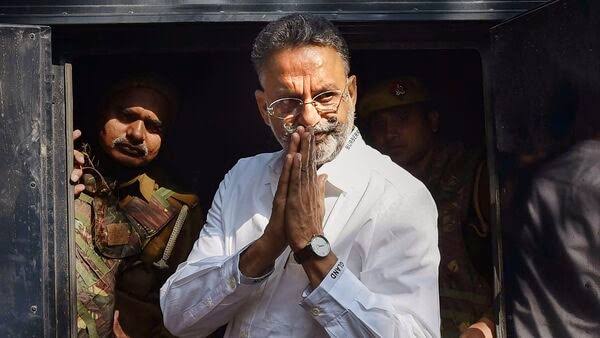




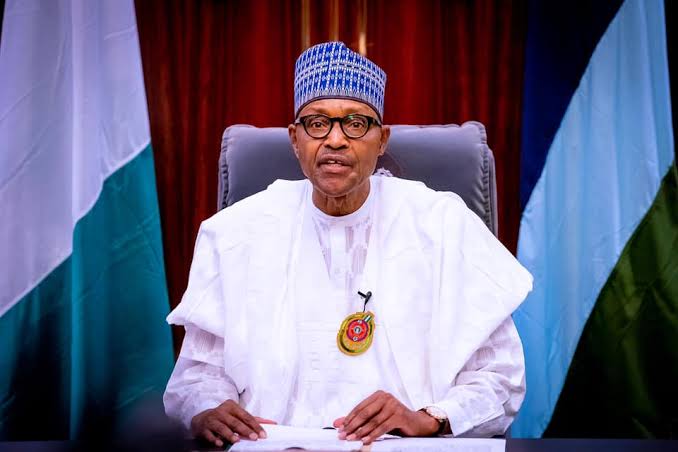
Muhammadu Buhari, a former Nigerian military ruler and the nation’s first opposition candidate to win a presidential election, has died. He was 82.
Buhari died on Sunday afternoon at a clinic in London, his spokesman Garba Shehu said in a statement, citing his family. He didn’t provide further details.
During his presidency, Buhari struggled to tackle endemic poverty and unemployment in Africa’s most-populous nation, or counter widespread insecurity and a spate of kidnappings. He also battled to diversify the economy away from oil, which accounts for the vast majority of Nigeria’s foreign-exchange earnings.
The economy dipped into recession twice within four years during his tenure and Nigerians grew poorer and less secure by nearly every measure. The World Bank estimates Nigeria has one of the highest number of people living in extreme poverty in the world.
Buhari stepped down in May 2023, at the end of his second elected four-year term, and was succeeded by Bola Tinubu, a former governor of Lagos State.



Ex- President Buhari’s Early Childhood
Buhari was born on December 17, 1942, in Daura, in present-day Katsina State, northern Nigeria. He was the 23rd child of his father, Adamu Bafallaji, a Fulani chieftain, and his mother, Zulaihat, who raised him after his father’s death when Buhari was about four years old.
Raised in a deeply Islamic, conservative household, Buhari’s early education was rooted in Islamic schooling before he enrolled in primary and secondary school in Katsina. He later attended the prestigious Katsina Provincial Secondary School (now Government College, Katsina).
His ambition and discipline led him to pursue a military career, enrolling at the Nigerian Military Training College (NMTC) in 1961. Later, he trained at the Mons Officer Cadet School in the UK and furthered his military education in India and the United States.
Education And Military Service
Educated largely in Katsina, Buhari took military training in Kaduna as well as in Great Britain, India and the United States.
He was involved in the military coup that ousted Yakubu Gowon in 1975 and was appointed military governor of North Eastern state (now Borno hat same year. He was appointed federal commissioner for petroleum resources by Gen. Olusegun Obasanjo who became military head of state when Gowon’s successor, Murtala Mohammed, was assassinated in 1976. By 1977 Buhari had become the military secretary at Supreme Military Headquarters, which was the seat of government. By September 1979 he had returned to regular army duties and commanded a division based in Kaduna. Although civilian government had returned to Nigeria in 1979 with the election of Shehu Shagari dissatisfaction with dismal economic conditions and what the military perceived as corrupt politicians led to another military coup on December 31, 1983, and Buhari was chosen unanimously to be the new head of state.
Buhari rose rapidly through the ranks of the Nigerian Army. He played prominent roles in Nigeria’s civil war (1967–1970) and later became Governor of the Northeastern State (now Borno, Bauchi, and others) under General Murtala Mohammed’s regime.
By the late 1970s, he held key military and administrative positions:
Federal Commissioner (Minister) for Petroleum and Natural Resources under Gen. Olusegun Obasanjo (1976–1978)
Chairman of the Nigerian National Petroleum Corporation (NNPC)
He built a reputation for discipline, integrity, and austere leadership.
Military Head Of State (1983–1985)
On December 31, 1983, Buhari led a military coup that overthrew the democratically elected government of President Shehu Shagari, citing corruption and economic mismanagement. He became Head of State and ruled Nigeria from January 1984 to August 1985.



His regime was marked by:
War Against Indiscipline (WAI) campaign
Crackdown on corruption and economic sabotage
Harsh economic austerity measures
Restriction of press freedom and civil liberties
Though many admired his anti-corruption efforts, his government was criticized as authoritarian. In August 1985, his regime was overthrown in a palace coup led by General Ibrahim Babangida. Buhari was detained for nearly three years.
Retirement And Re-entry Into Public Life
After his release in 1988, Buhari led a relatively quiet life, occasionally making public interventions on national issues. He chaired:
Petroleum Trust Fund (PTF) (1995–1999), under General Sani Abacha’s regime, where he managed oil revenues for infrastructure projects.
Political Journey
In 2003 Buhari ran for president and was defeated by the incumbent Olusegun Obasanjo
Buhari ran again in 2007 but was defeated by the PDP’s candidate, Umaru Yar’Adua in an election that was strongly criticized by international observers as being marred by voting irregularities. Buhari also stood in the 2011 presidential election, which was praised for largely being transparent, free, and fair, but he again lost to the PDP’s candidate, incumbent Goodluck Jonathan.
In 2014 the All Progresssives Congress (APC) party nominated Buhari to stand as its candidate in the 2015 presidential election. His reputation for being incorruptible and his military background made him an attractive candidate, whom many Nigerians hoped might be able to more effectively handle the threat posed by the Islamic militant group Boko Haram, those violent acts had terrorized parts of the country in recent years.
The March 28 presidential election had 14 candidates, although the real contest was seen as being between Buhari and Jonathan, who was again the PDP’s candidate. In what was Nigeria’s most closely fought election ever, Buhari garnered the most votes—some 2.5 million more than Jonathan, his closest competitor—and was declared the winner. His win marked the first time that the incumbent president had been defeated in Nigeria. Buhari was inaugurated on May 29, 2015.
His First Term Focused On:
Anti-corruption war (high-profile convictions but accused of selective justice)
Security: Pledged to defeat Boko Haram, made initial gains, but insurgency persisted
Economic downturn: Nigeria slipped into recession in 2016
Controversial foreign medical trips, mostly to the UK
Second Term (2019–2023)
His re-election came with declining popularity. Key challenges included:
Escalating insecurity: Banditry, kidnappings, herder-farmer clashes, and continued insurgency
#EndSARS protests (2020): Youth-led demonstrations against police brutality and bad governance, violently suppressed
Economic hardship: Inflation, unemployment, and growing poverty
Buhari’s government was also criticized for shrinking civic space and disregarding court rulings.
Despite criticisms, Buhari maintained a loyal base, especially in the north, where he was viewed as a symbol of discipline and Islamic values.
Post-presidency And Death
Buhari left office in May 2023, succeeded by President Tinubu. He retired to his hometown, Daura, and largely stayed out of national politics. He continued to seek medical treatment in the United Kingdom, where he had long-standing health care arrangements.
On July 13, 2025, the Nigerian presidency confirmed that Muhammadu Buhari died in London, aged 82, following a prolonged illness.
Private life
Buhari married Safinatu Yusuf in 1971. They had five children before divorcing in 1988. He later married Aisha Halilu Buhari in 1989, with whom he had additional children. Known for his spartan lifestyle, Buhari avoided flamboyance and often emphasized personal discipline.
Legacy
Buhari’s legacy remains deeply debated: many Nigerians felt despite his military background his administration was overwhelmed by spate of insecurity, killings and terrorism. He would be remembered for taking a soft approach towards dealing with the issue, despite the overwhelming situation.
Buhari would be remembered for his nepotic appointments and jettisoning of federal character in appointing people to key federal institutions. The North was often flavoured.
Achievements
Symbol of anti-corruption, even if inconsistently enforced
Reoriented Nigeria toward infrastructure revival (roads, rail, airports)
Improved military procurement transparency
Oversaw electoral reforms and signed the Electoral Act Amendment (2022)
Criticisms
Authoritarian tendencies, both as military ruler and in civilian presidency
Poor handling of insecurity and economy
Frequent foreign medical patronage
Repression of dissent and civil liberties
Muhammadu Buhari lived a life that spanned the military barracks and ballot boxes. To his admirers, he was a disciplined patriot who tried to sanitize Nigeria. To his critics, he was an unbending authoritarian who failed to deliver real progress. His death ends an era in Nigeria’s long search for leadership rooted in both integrity and democratic values.